Research Interests
Organic and Supramolecular Synthesis and Functional Outcomes
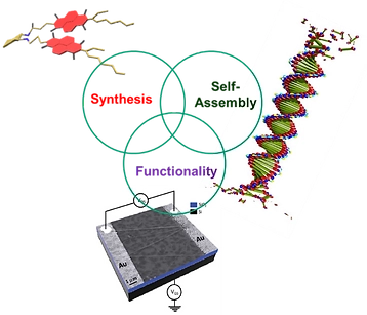
Since 2008, the underlying theme of our research lies at the interface between synthetic efforts on small molecules/polymers and macroscopic properties at the materials level, thus developing a supramolecular approach to bio-inspired organic and hybrid functional materials. The major objective is the improvements in the opto-electronic properties of π-conjugated systems via a supramolecular self-assembly approach. Some of the specific areas of research initiated in our supramolecular chemistry laboratory are organic/supramolecular synthesis of pi-conjugated systems, charge-transfer nano-fibers, organic-inorganic hybrid materials, stimuli-responsive/supramolecular polymers, bio-inspired dynamic assemblies, and helical assemblies.
Since 2015, we directed our research work towards understanding of self-organization of biological systems that have amazing spatio-temporal control over their self-assembly and functions as well as utilizing the knowledge of supramolecular organization for material applications such as development of novel functional organic and hybrid materials. During this period, we made unique contributions in the field of mechanistic aspects of supramolecular polymerizations and the design of living and non-equilibrium supramolecular polymerization.
The research output from our group has had significant impact on recent developments in in both Basic and Applied Chemistry. Our pioneering work on temporal supramolecular polymers has resulted in fundamental mechanistic understanding of non-equilibrium processes governing their synthesis, advancing the frontiers in this area of research. On the other hand, we brought in novel concepts in soft materials leading to organic opto-electronic devices with enhanced efficiency. With a focus on the supramolecular self-assembly, our research interest has strong emphasis on
(i) Fundamental understanding of supramolecular polymerization in terms of mechanisms, active at various time and length scales and
(ii) Applications of functional supramolecular organic materials in optoelectronic devices. The followings are our recent area of interest:
1) Bioinspired Strategies for Controlling the Hierarchical Supramolecular Architectures:
Biological systems host complex adaptive networks with precise Spatio-temporal control, coupled with sophisticated functionality. In the recent past, our group has made significant inroads towards elucidating the synthetic strategies for the realization of these concepts in materials. Extracting the gist of out-of-equilibrium, fuel-driven networks from the biological world, chemical fuel-driven supramolecular polymerization strategies pioneered in our research laboratory have notably advanced the frontiers of constructing controllable and adaptive materials with mono-disperse structure and predictive sequences. The following are some of the strategies used by us towards achieving adaptive, autonomous, and like-life out-of-equilibrium supramolecular materials.
1A) ATP-fuelled, enzymatically Controlled Approach:
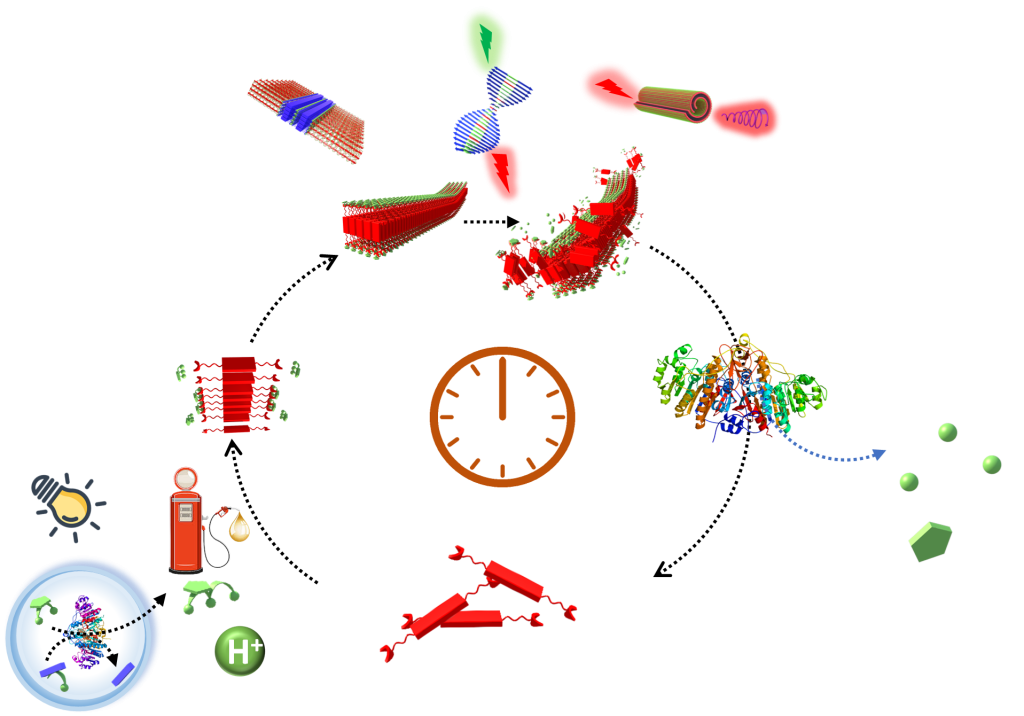
Inspired from Actin protein assemblies, which shows controlled polymerization in response to adenosine triphosphate (ATP) fuel via nucleation-elongation process in a temporal manner to regulate mechanical stability of cell, we have introduced ATP selective and ATP-fuelled synthetic strategies to controlled supramolecular polymerization of a phosphate receptor functionalized monomer (dormant monomer). Here, the system undergoes fuel-driven nucleation and seeded growth that provide length control and narrow dispersity of the resultant assemblies. We present a bioinspired, reaction-coupled approach for the controlled supramolecular polymerization in synthetic systems. Using an enzymatic reaction that interfaces with the adenosine triphosphate (ATP)-templated supramolecular polymerization of naphthalene diimide monomers (NSG) and facilitates reaction-controlled, cooperative growth of the monomers. This growth process, in turn, provides positive feedback to the enzymatic production of ATP, creating an ideal reaction-coupled assembly process. Also, we demonstrated a seed-induced supramolecular polymerization approach for modulating the chiral asymmetry of a supramolecular polymer under kinetic conditions, where amphiphilic ANSG molecule effectively undergo template-induced supramolecular polymerization in the presence of both chiral ATP and achiral PPi templates. Chiral seed comprising [ANSG-ATP] effectively amplifies the overall supramolecular asymmetry when exposed to a mixture of achiral templates (PPi) and monomers (ANSG). This work further includes controlled non-covalent synthesis of 2D heterostructures like bottle brush and gradient heterostructures.
Angew. Chem. Int. Ed. 2025, 64, e202413747
J. Am. Chem. Soc. 2024, 146, 14844–14855.
Angew. Chem. Int. Ed. 2023, 62, e2023082.
1B) Toward Programmable Supramolecular Topologies through Surface-Catalyzed Growth Hierarchical Supramolecular Polymerization:
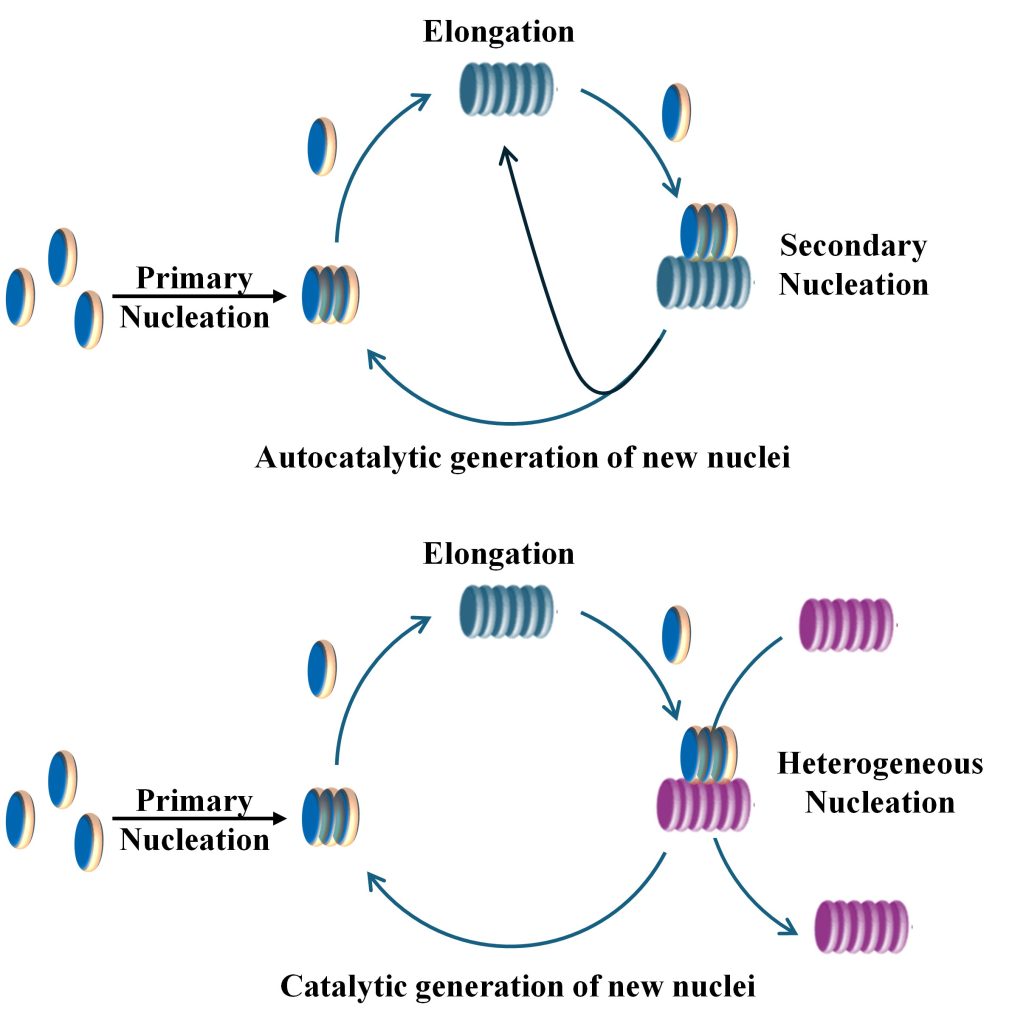
Synthetic self-assembling systems often exhibit hierarchical morphologies under microscopic observation. However, most of these hierarchical structures arise in an uncontrolled manner. Due to post-synthetic agglomeration of polymer fibers, such hierarchical polymers tend to be highly polydisperse and structurally irregular. Much like biological protein assemblies formed under kinetic control, this area requires a bottom-up synthetic strategy that enables controlled hierarchical supramolecular polymerization by regulating the process from the nucleation stage rather than relying on post-polymerization events. This is where the importance of surface nucleation becomes evident. Here in our group we have employed chirality mismatch and bio-inspired inhibition strategies that drives supramolecular polymerization for Hierarchical structures.
J. Am. Chem. Soc. 2026,148, 27494–27508.
J. Am. Chem. Soc. 2023,145, 22009–22018.
J. Am. Chem. Soc. 2021,143, 11777–11787.
J. Am. Chem. Soc. (Under revision)
1C) Crowding Effect in Supramolecular Polymerisation:
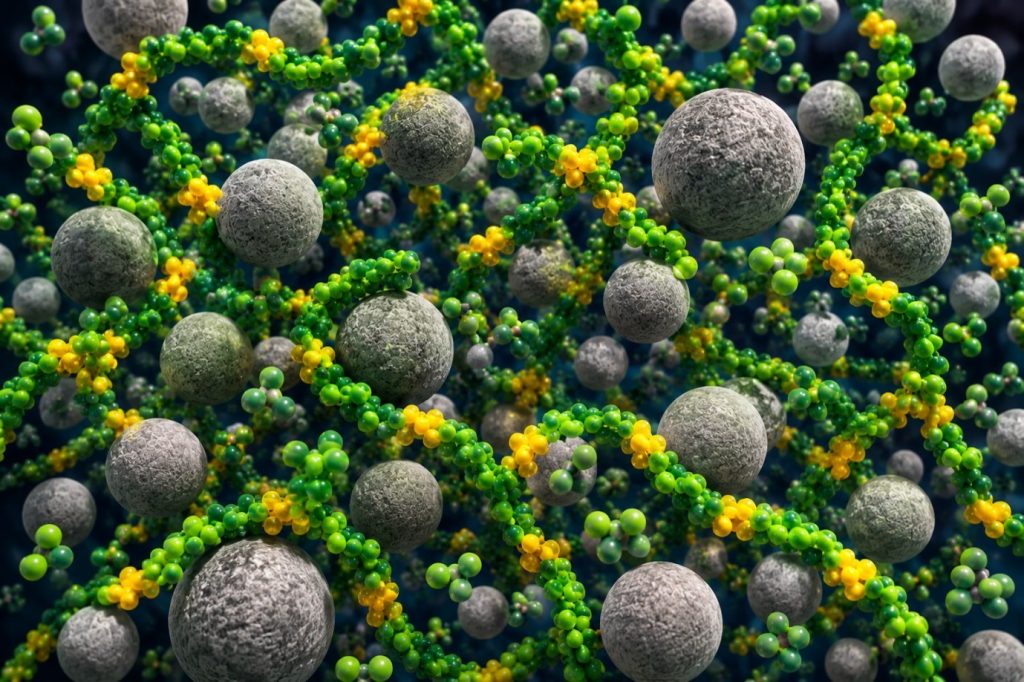
Macromolecular crowding is an inherent feature of cellular and synthetic environments that can strongly influence supramolecular polymerisation. By reducing the available free volume, crowding agents can increase the effective local concentration of assembling monomers, alter their diffusion, and modulate the thermodynamics and kinetics of nucleation and growth while taking advantage of the proximity effect between the monomers. These effects can further promote supramolecular polymerisation by favouring intermolecular association and stabilising assembled states. Understanding how macromolecular crowding regulates nucleation, elongation, and structural organisation provides our group with important insight for controlling supramolecular polymerisation.
2) Programmable Liquid-Liquid Phase Separation (LLPS) and Controlled Supramolecular Polymerization of Synthetic Small Molecules:
J. Am. Chem. Soc. 2024, 146, 12577−12586
J. Mater. Chem. B, 2025, 13, 604–609
J. Am. Chem. Soc. 2025, 147, 16027−16037
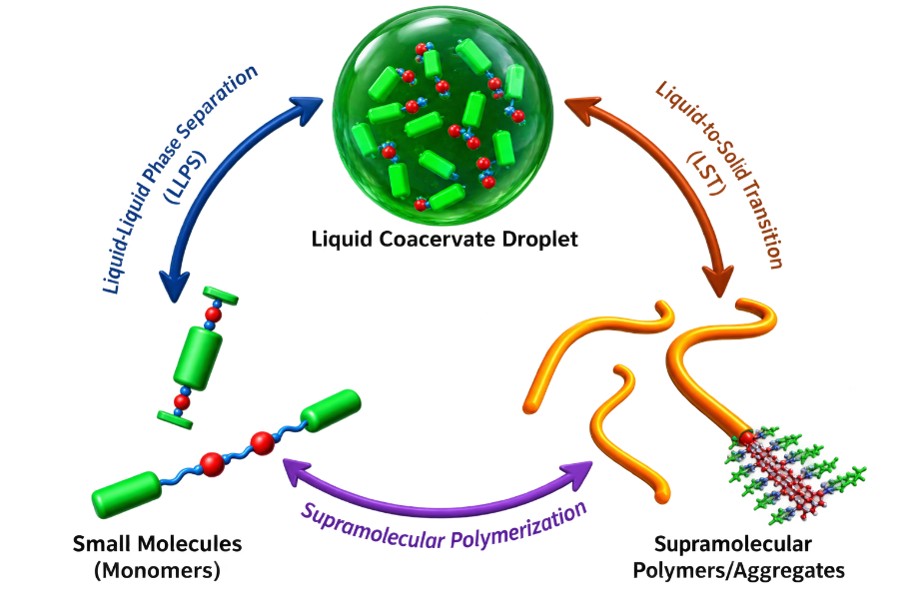
Chemists have always been inspired by nature’s incredible ability to control processes at a variety of temporal and spatial scales, which is crucial for the emergence and upkeep of life. For example, depending on their folding state and the environment, proteins can self-assemble into highly structured structures or liquid-like condensates. Membraneless organelles (MLOs), which serve as dynamic centers for RNA transport and processing, molecular storage, and metabolic processes, are created by liquid-like condensates. In our group, we are working on synthetic coacervates extending beyond their established role in synthetic biology as dynamic, membraneless phases to enable structural control in synthetic supramolecular polymers via a bioinspired approach. We are also working on reaction-coupled, programmable coacervate droplets by exploiting dynamic covalent chemistry to construct a sticker–spacer architecture that drives coacervation.
3) Multicomponent Supramolecular Polymerization:
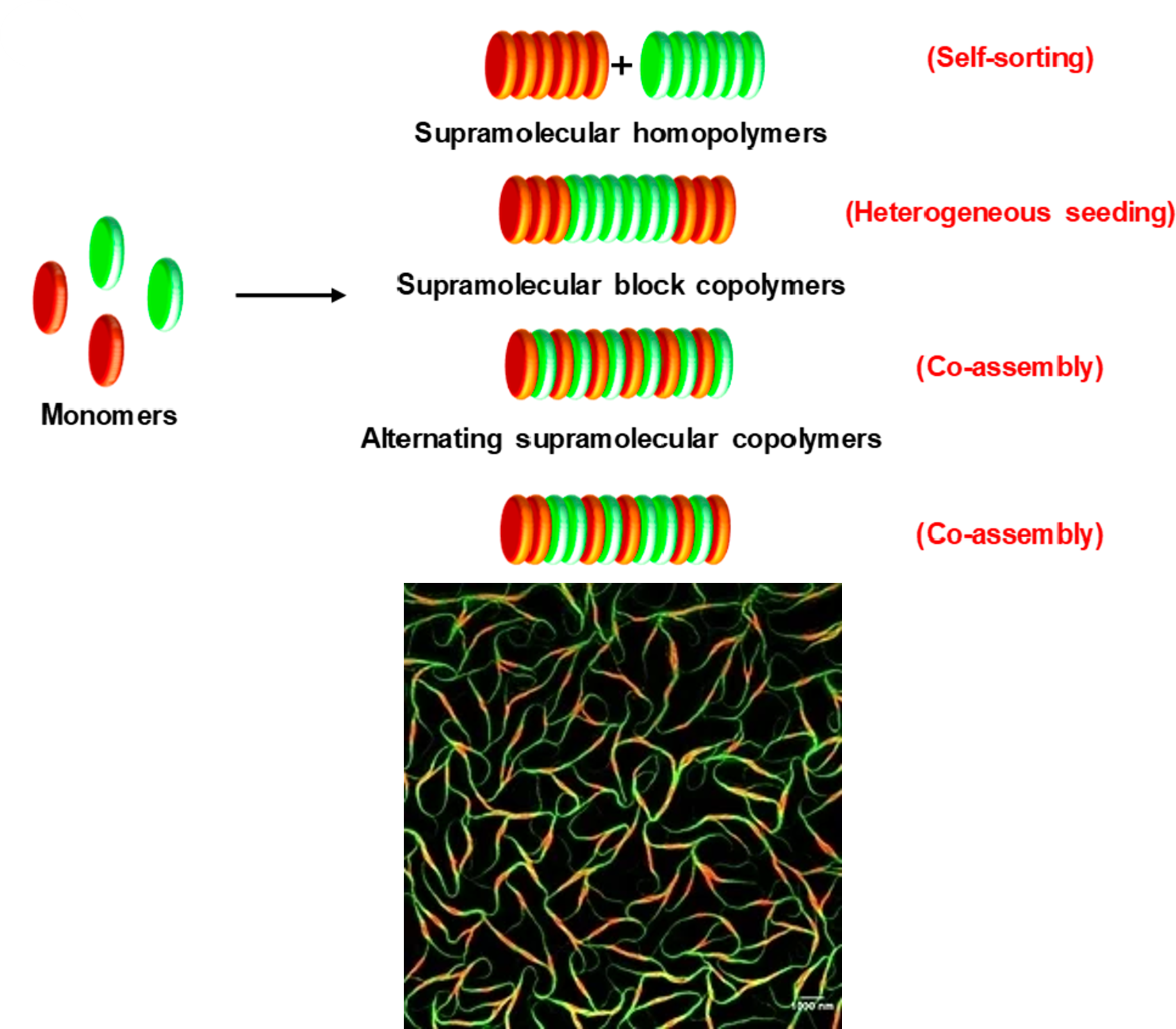
The structural and sequence control brings areas such as energy transfer, catalysis, chemical signalling into the domain of temporal control, opening up possibilities that photonic materials, organo-catalysts, electronically active materials and drug delivery platforms could be potentially designed with precise structure and temporally executed, thus mimicking the adaptive characteristics of biological world.Creating a general strategy, applicable to a large class of molecules, for controlled aggregation effectively impacts its functional aspects as well.
In addition, this development is expected to have a deeper impact on soft-lithography of organic nanostructures as kinetically controlled processes adding finesse to device fabrication. Control over the temporal profile of material growth allows unprecedented sequence control of supramolecular aggregates leading to fabrication of complex, multicomponent structures such as, the exotic and highly coveted, axial p-n organic hetero-junctions and heterostructures at nanoscale and over the length scale of supramolecular polymers. Recently, we have shown kinetic and thermodynamically controlled approaches for the design of axial organic heterostructures, via the supramolecular block co-polymerization of opto-electronically active organic semiconducting monomers.
Angew. Chem. Int. Ed. 2017, 56, 13767 –13771
J.Am.Chem.Soc. 2020, 142, 7606−7617.
Angew. Chem. Int. Ed. 2020, 59, 19841–19845
4) Organic Optoelectronics:
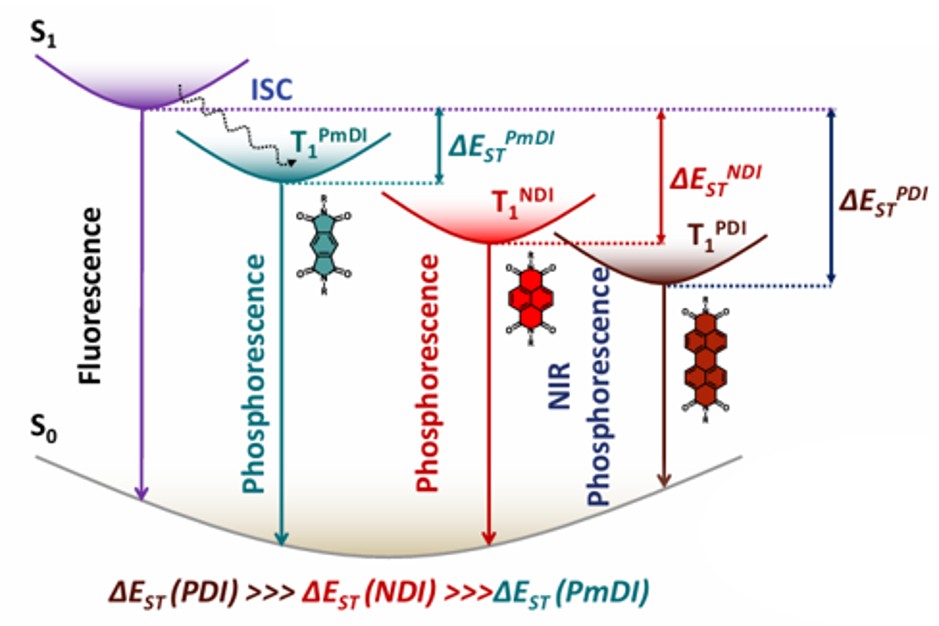
Triplet excitons are important because their long lifetimes provide a versatile excited-state reservoir for efficient energy harvesting, storage and transfer, long-lived light emission in organic materials. Our research focuses on harnessing, stabilizing and utilization of triplet excitons in purely organic materials. We employ diverse covalent and non-covalent strategies to bias the emission pathways and fine tune the spectral characteristics. The following are some of the approaches used by us towards achieving ambient triplets in challenging conditions, including aqueous environments, extending the use of triplet mediated processes in water.
4A) Phosphorescence in Aqueous Phase via Supramolecular Scaffolding:
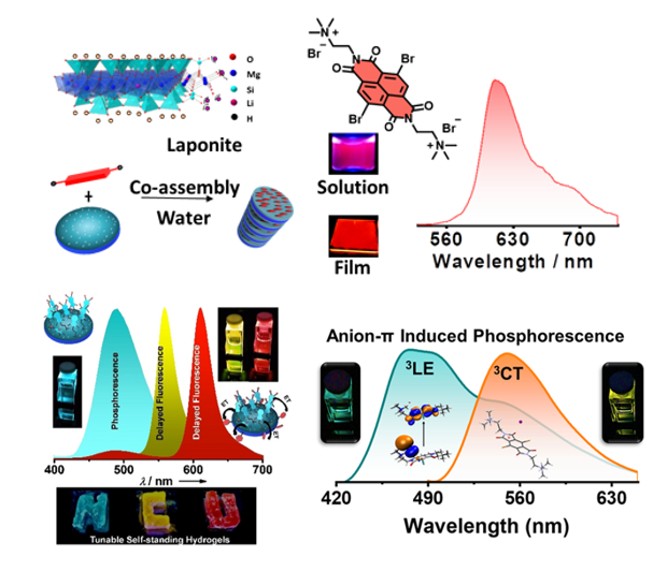
Triplet stabilization has been a challenging task. We have employed a supramolecular scaffolding approach by using the co-assembly of organic phosphors with an inorganic silicate template to minimize vibrational quenching of triplet excitons. Long-lived triplet excitons provide a persistent energy reservoir that enables controlled energy transfer, triplet harvesting, and long-lived emission. This supramolecular confinement effectively modulates the excited-state dynamics and prolongs the lifetime of the triplet states. Such stabilized triplets can further serve as efficient energy donors for sensitizing other chromophores and accessing otherwise difficult-to-achieve excited-state pathways.
Angew. Chem. Int. Ed. 2018, 27, 17115-17119
Angew. Chem. Int. Ed. 2021, 60, 19720-19724
J. Am. Chem. Soc. 2022, 144,10854–10861
4B) Biasing the Excited State by Covalent / Non-Covalent Approaches:
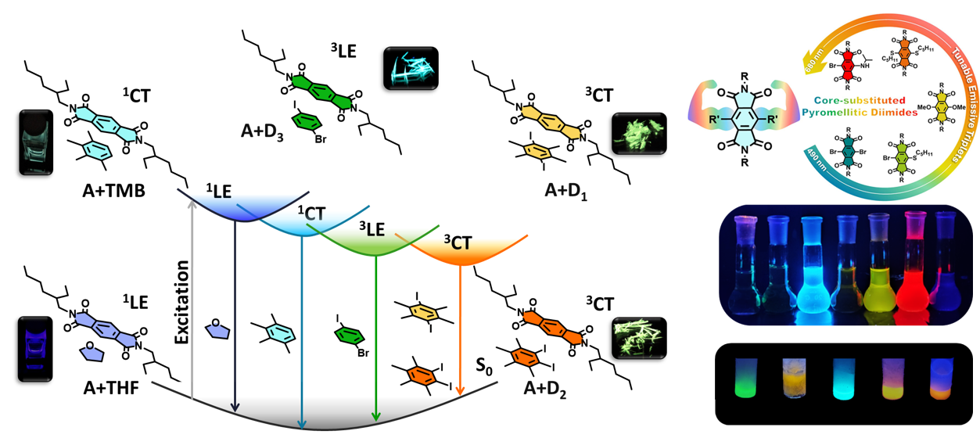
Engineering the electronic excited state manifolds of organic molecules can give rise to various functional outcomes, including ambient triplet harvesting. We employ diverse covalent and non-covalent strategies to bias the emission pathways and fine tune the emission colour. This enables a wide-range phosphorescence and delayed fluorescence spanning across the visible spectrum.
Angew. Chem. Int. Ed. 2021, 60, 12323-12327
Chem. Sci. 2022, 13, 10011-10019
J. Am. Chem. Soc. 2025, 147, 15591–15601
4C) Circularly Polarized Phosphorescence and Delayed Fluorescence:
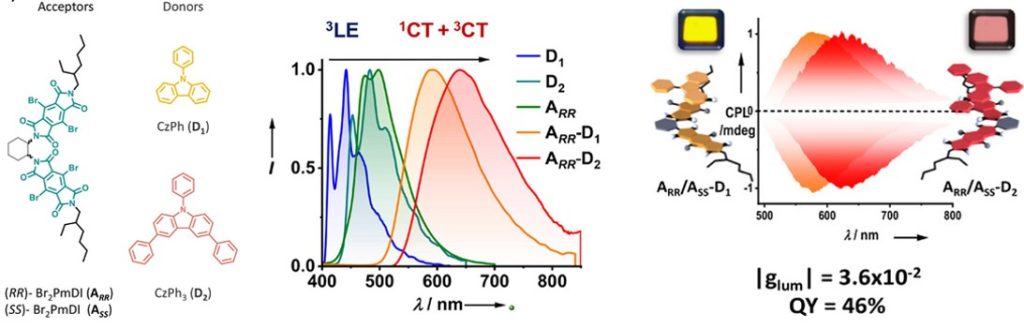
Achieving efficient circularly polarized luminescence (CPL) with a high luminescence dissymmetry factor (|glum|) in purely organic systems is a vibrant and rapidly evolving field of research. We employ non-covalent design strategies for the tuning of emission from the orange to deep-red regions by incorporating various donors. We are currently investigating chiral scaffolds containing our phosphors to achieve efficient circularly polarized phosphorescence and delayed fluorescence.
Angew. Chem.Int. Ed. 2022, 61, e202115773
Angew. Chem. Int. Ed. 2025, 64, e202501330
5) Investigation of Ground and Excited State Chiroptical Properties
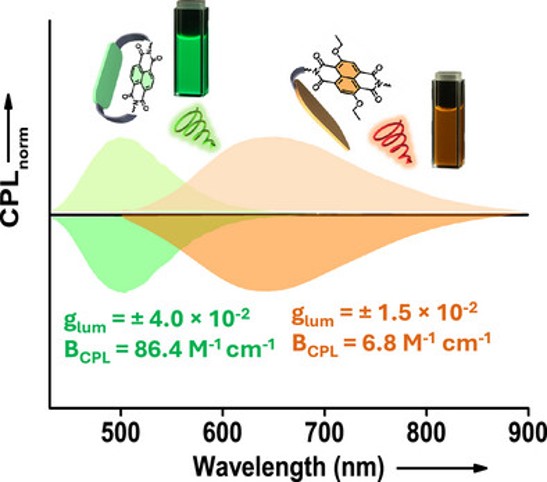
Angew. Chem. Int. Ed. 2026, 65, e20385
Angew. Chem. Int. Ed. 2023, 62, e202308281.
Despite the overall development in synthesizing precise and exotic multicomponent organic microstructures, their most viable application in harnessing excited-state chiroptical properties remains largely unexplored. In our group, we utilise a few versatile and benevolent chromophores whose π-core can be used to harness excimeric interactions, modified through core substitution to form energy-transfer pairs, made sufficiently electron-deficient to form charge-transfer pairs, or designed to access triplet states. Such chromophores, paired with supramolecular strategies to construct various microstructures under kinetic and thermodynamic control, help us obtain supramolecular assemblies with considerably high circularly polarised luminescence (CPL) capabilities. Recently, we have showed excimeric, through-space charge-transfer, and chiroptical amplification strategies to obtain highly efficient CPL-active systems with very high glum values from small molecules through supramolecular self-assembly or supramolecular host–guest interactions. This has opened up a milieu of opportunities to pursue the long-standing goal of achieving bright, highly CPL-efficient molecular designs for CP-OLEDs, chiral imaging, and security applications.
6) Photocatalysis using Supramolecular Polymers:
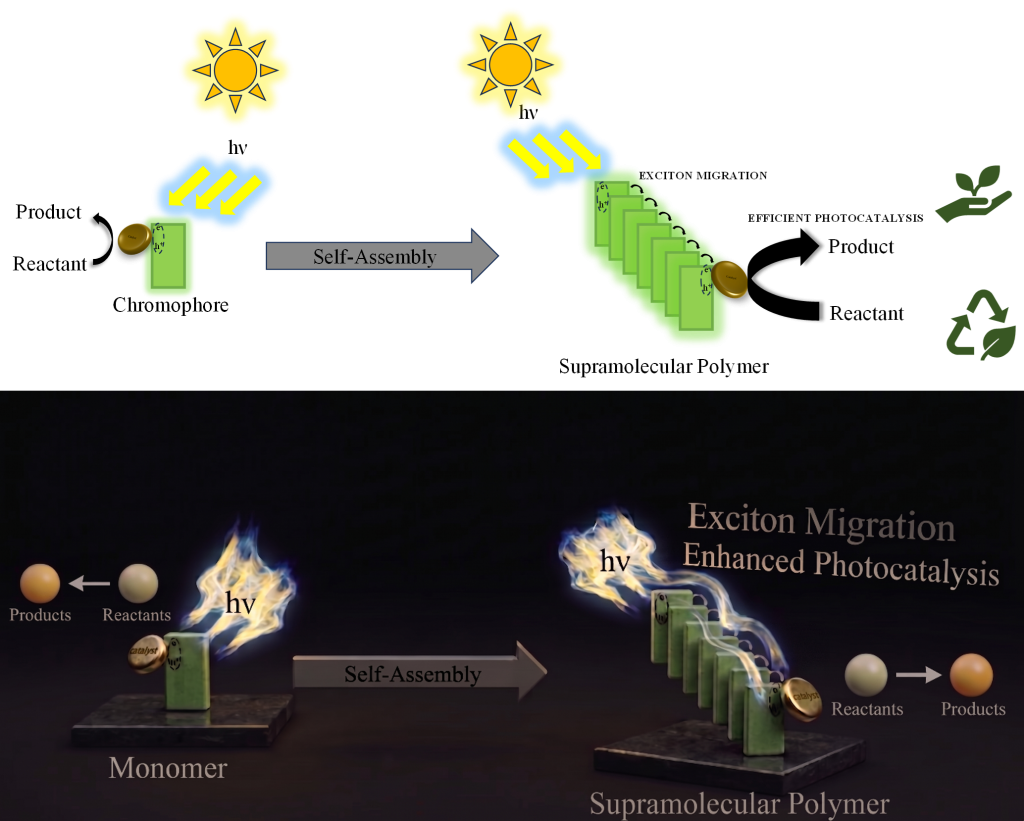
Supramolecular polymers provide an alternative paradigm for photocatalysis by integrating molecular self-assembly with the functional properties of polymeric systems. Their dynamic and reversible nature enables the organization of functional building blocks into well-defined architectures, offering new opportunities to control light absorption, energy and charge transfer, and catalytic processes. Unlike conventional approaches, supramolecular polymerization provides a flexible platform in which structural and functional properties can be modulated through molecular interactions and assembly processes. This research focuses on understanding how self-assembly can be harnessed to develop adaptable and efficient photocatalytic systems, while establishing fundamental relationships between molecular organization, emergent properties, and photocatalytic function.